Digital memoir and storytelling · Ancestor Stories
Giving a family memoir a thoughtful place on the web.
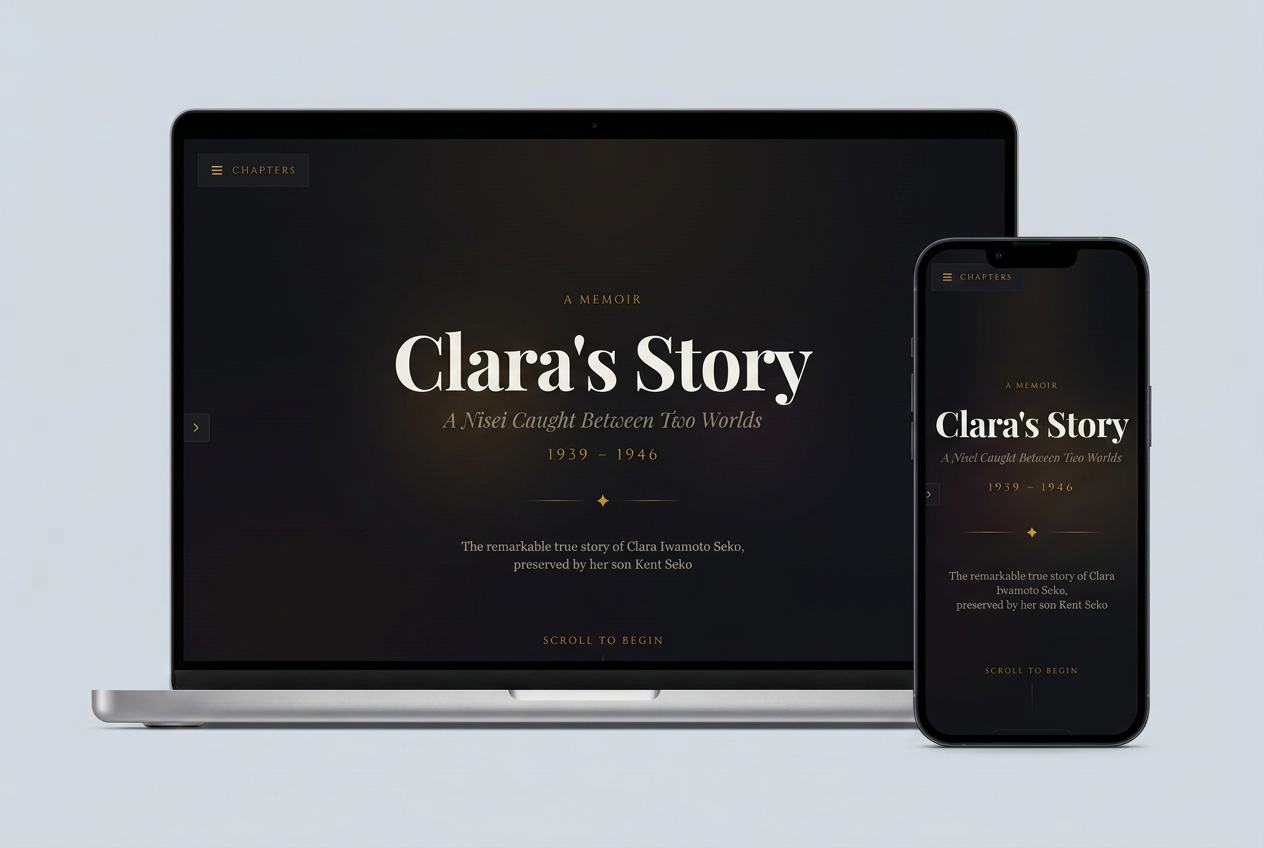
Clara’s Story presents a memoir attributed to Clara Iwamoto Seko, spanning 1939–1946. The project describes the account as transcribed from her handwritten pages and preserved by her son, Kent Seko. Chapters, a timeline, excerpts, and photographs turn the long narrative into a web reading experience.
- Project
- Ancestor Stories: Clara’s Story
- Experience
- Long-form digital memoir
- Material
- Attributed memoir, excerpts, and photographs
- Focus
- Reading, chronology, and story navigation
The challenge
A long, personal account deserves more than a wall of text.
A memoir asks readers to hold places, people, and events in mind across many pages. Preserving that voice while helping readers stay oriented is a different design problem from presenting a catalog or selling a service.
This project organizes the narrative into five parts and an epilogue, with dated scenes, a chapter menu, and a separate timeline. The goal expressed by the project is to preserve the account and make it available to future readers.
The approach
Start with the visitor's next decision.
The experience centers the story rather than a sales message. A chronological structure provides the main reading path, with chapter and timeline controls for readers who want to explore a particular moment. Distinct treatments for narration, excerpts, and documents give the material room to speak.
The solution · Small things, big impact
Three choices that give a long story room to unfold.
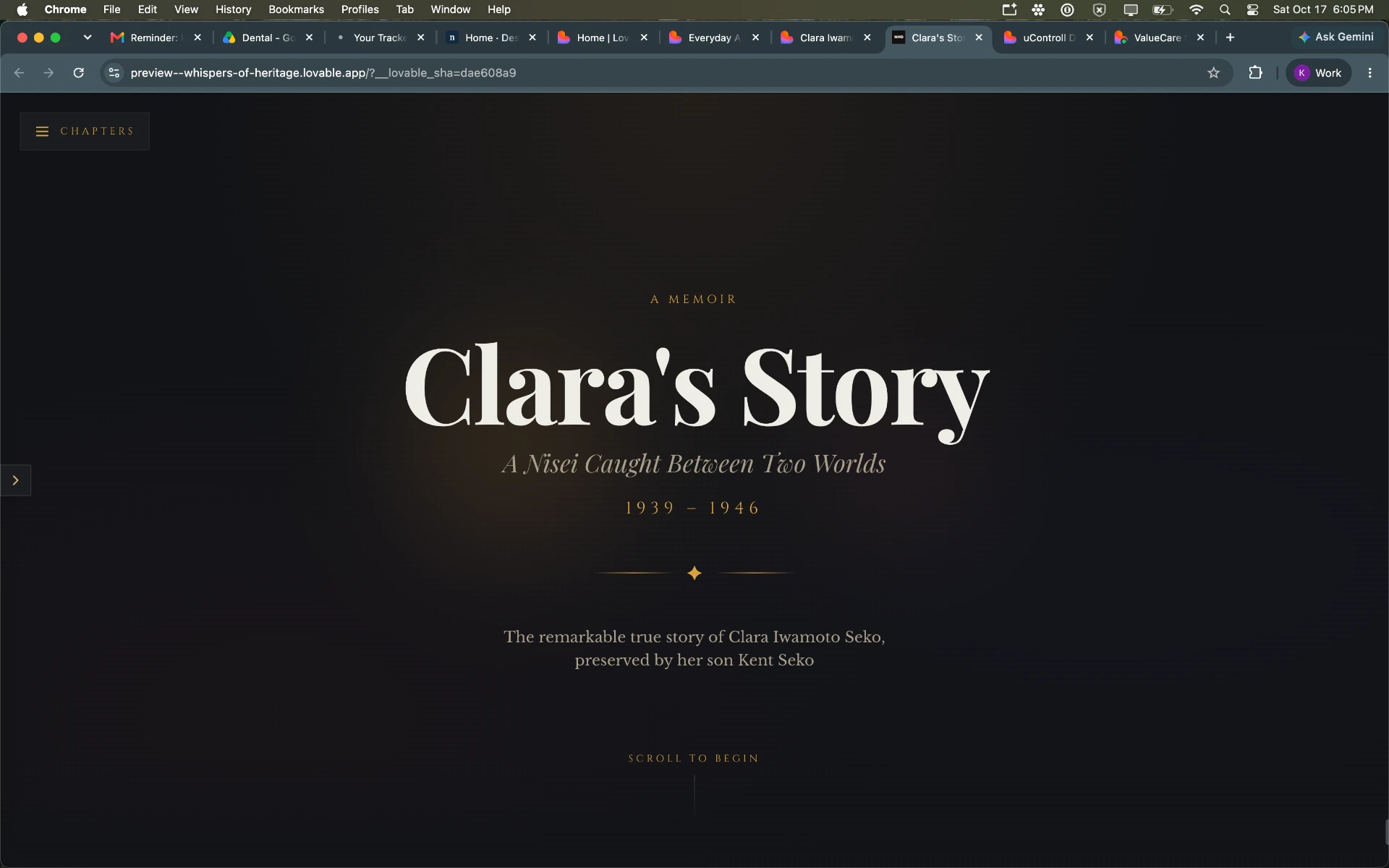
- Story named. The title is the first and strongest signal.
- Time established. The period gives the narrative an immediate frame.
Begin with the story, not a busy menu.
The small thing
The opening screen introduces Clara’s Story, its memoir subtitle, and the 1939–1946 period. A restrained Chapters control gives readers a way in without competing with the title.
What it can do for a business
A focused opening establishes what a reader is about to encounter. For an archive or an organization’s history, that can create a more considered introduction than a page full of competing links.
- Chronological parts. The narrative is divided into dated chapters and scenes.
- Two navigation views. Chapters and timeline provide different ways to explore; individual targets were not verified in this review.
- Material distinguished. Narration, excerpts, and images have separate presentation treatments.
Give readers more than one way through the material.
The small thing
Five parts and an epilogue create a chronological reading sequence. An expandable chapter menu and a separate timeline offer scene links. Reusable text and photo treatments distinguish narration, quotations, and document-like passages.
What it can do for a business
Some readers follow every paragraph; others look for a particular moment. Multiple ways into a long story can help both, while different content treatments make the material easier to recognize.
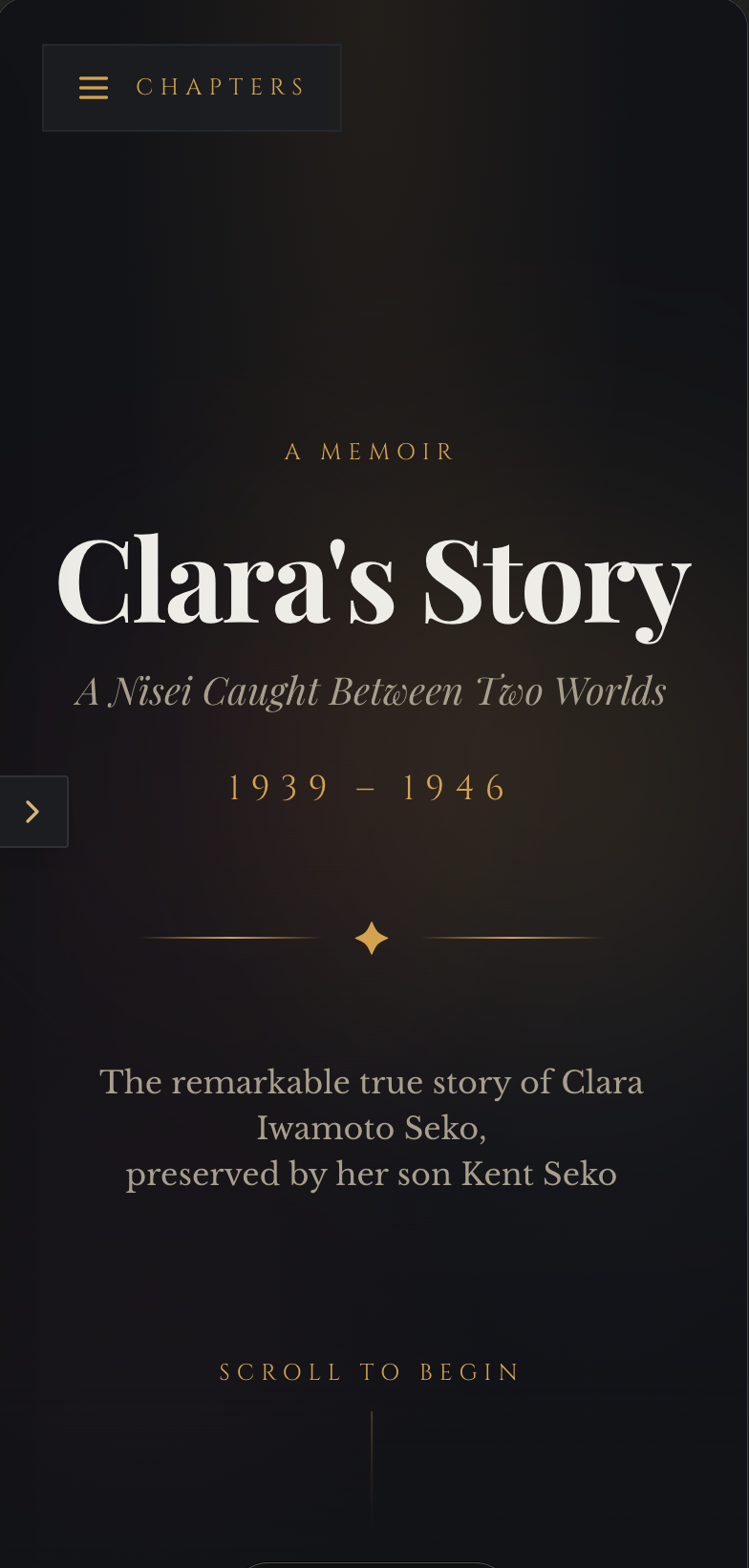
- Reading comes first. The mobile opening still centers the title and story.
- Shared as a link. A web presentation makes the material available beyond a printed page.
Let the story travel beyond a desktop.
The small thing
The supplied phone view keeps the memoir title and introductory framing at the center of the experience, adapting the composition to a narrow screen.
What it can do for a business
A family story is often shared as a link. A readable phone introduction gives someone receiving that link a welcoming place to begin, wherever they are.
The outcome
A clearer experience, with results still to measure.
This study describes the narrative structure and interface choices present in the source project, illustrated with Krissie’s supplied screenshots. Historical details are reported as the memoir’s account, not independently verified facts. It does not claim measured readership, tested accessibility, or validation of every chapter and timeline link.
Try this on your own site
Ideas for businesses and people with a story to tell.
Let the material set the pace.
Not every website needs to begin with an offer or a purchase button.
Give long content a clear structure.
Chapters and dates can help readers keep their bearings.
Keep attribution visible.
Say whose account is being presented rather than implying independent historical verification.
This study describes the narrative structure and interface choices present in the source project, illustrated with Krissie’s supplied screenshots. Historical details are reported as the memoir’s account, not independently verified facts. It does not claim measured readership, tested accessibility, or validation of every chapter and timeline link.
What could feel easier for your customers?
Let’s give your story a thoughtful home.
Whether it is a family archive, a founder’s story, or an organization’s history, we can shape a digital experience that respects the material and welcomes the reader.
Let's talk about your project